Although it would be nice to keep everything the same way, things change, and the world is evolving as this is being written.
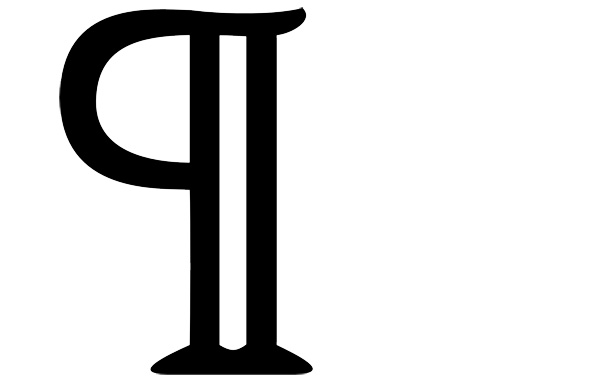
Punctuation is just one of those things that changes as time goes on. Most people write how they talk or think. An unknown writer reflecting on a piece by Henry Hitchings states that "punctuation comes and goes" (Punctuation, Social Media, and Evolving Rules of Communication, unknown author). Punctuation changes with the time, as does text message lingo. Teenagers do not know what a pilcrow or a hedra is. Some authors have decided to do away with punctuation all together as blogger Elizabeth Austin did in her poem "On Punctuation." In her poem Austin is bored by the "dogma of the period" and the "tight-lipped fence of the colon." In the second half of the poem, Austin speaks fondly of ellipses and exclamation points, which are known by the majority of people, but not commonly seen. With the use of more modern punctuation, people will be able to convey their emotion in a better way than before, Punctuation helps show tone of a work without the use of words. Another well known poet, Emily Dickinson, uses dashes in her poem and talks about the possibility of "A fairer House than Prose." Dickinson uses dashes to express her emotions about how she sees poetry as a world with new punctuation. Many authors dream of a world where they are unrestricted by the rules of punctuation and can adapt to the lingo of the modern world.

I like your analysis for the poems written by Austin and Dickinson! I feel that a piece needs both proper punctuation and correct diction in order to convey its message.
ReplyDelete